
Helping children and adults build the skills, confidence, and connections they need to thrive
My Specialties
DIR Floortime® is a developmental, relationship-based approach that supports growth through connection, interaction, and play. It focuses on meeting each child where they are developmentally and using meaningful engagement to support overall emotional, social, and cognitive development.
The approach emphasizes understanding each child’s unique way of relating and learning, and using that understanding to support deeper engagement, communication, and participation in everyday life.
Sensory Integration focuses on how a child processes and organizes sensory information from their body and environment. When sensory processing is well-regulated, children are better able to attend, move, participate, and stay emotionally regulated throughout their day. I use sensory-based strategies to support modulation, body awareness, motor planning, and adaptive responses across home, school, and community settings.
Occupational Therapy supports a child’s ability to participate in the meaningful activities of daily life—what they need, want, and are expected to do. This may include self-care routines, fine and gross motor skills, handwriting, play skills, feeding, attention, and emotional regulation. Interventions are individualized to improve independence, confidence, and participation in everyday routines.
Types of Services

Parent support sessions provide collaborative coaching to help caregivers better understand their child’s unique strengths and challenges. Together, we explore practical strategies to support regulation, connection, and development during everyday routines and interactions. These sessions empower parents with confidence, clarity, and tools they can use in real life.
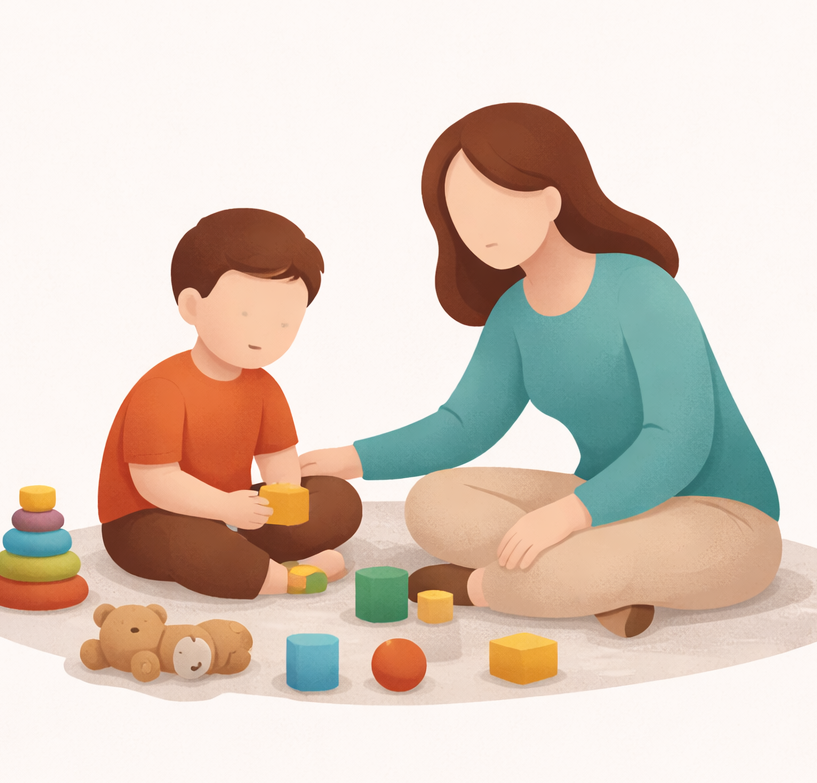
In-home occupational therapy is provided in the comfort of your child’s natural environment, where they feel safest. Sessions are relationship-based and individualized, supporting emotional regulation, connection, play, and daily routines through meaningful interactions. By meeting children where they are, occupational therapy builds functional skills that carry over naturally into everyday life.
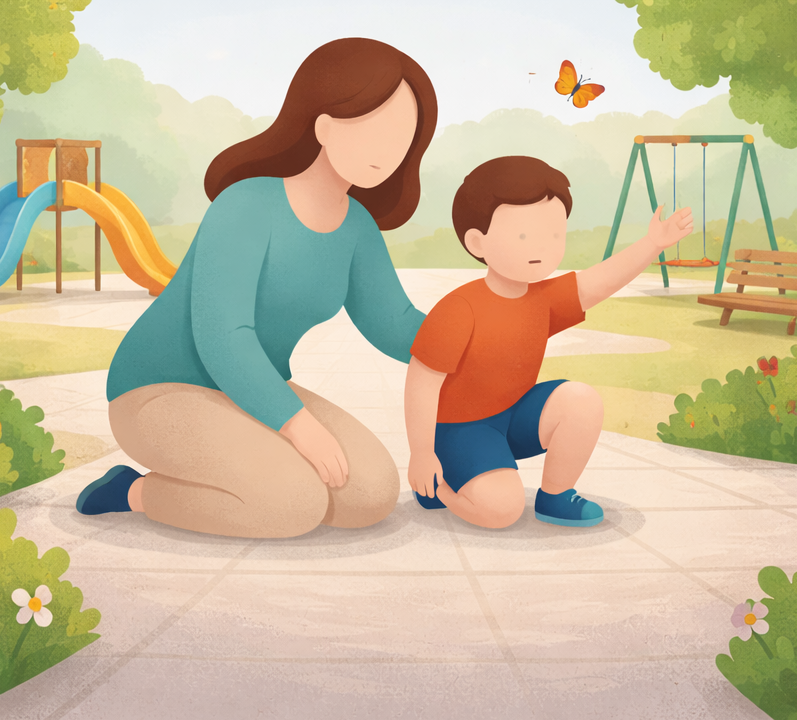
Community-based occupational therapy supports children in real-world settings such as parks, stores, and neighborhood spaces. For older children, sessions may focus on daily living skills like grocery shopping, planning, and community navigation, while younger children are supported with social engagement, play, and peer interactions. These experiences help build confidence, independence, and flexibility in environments children encounter every day.